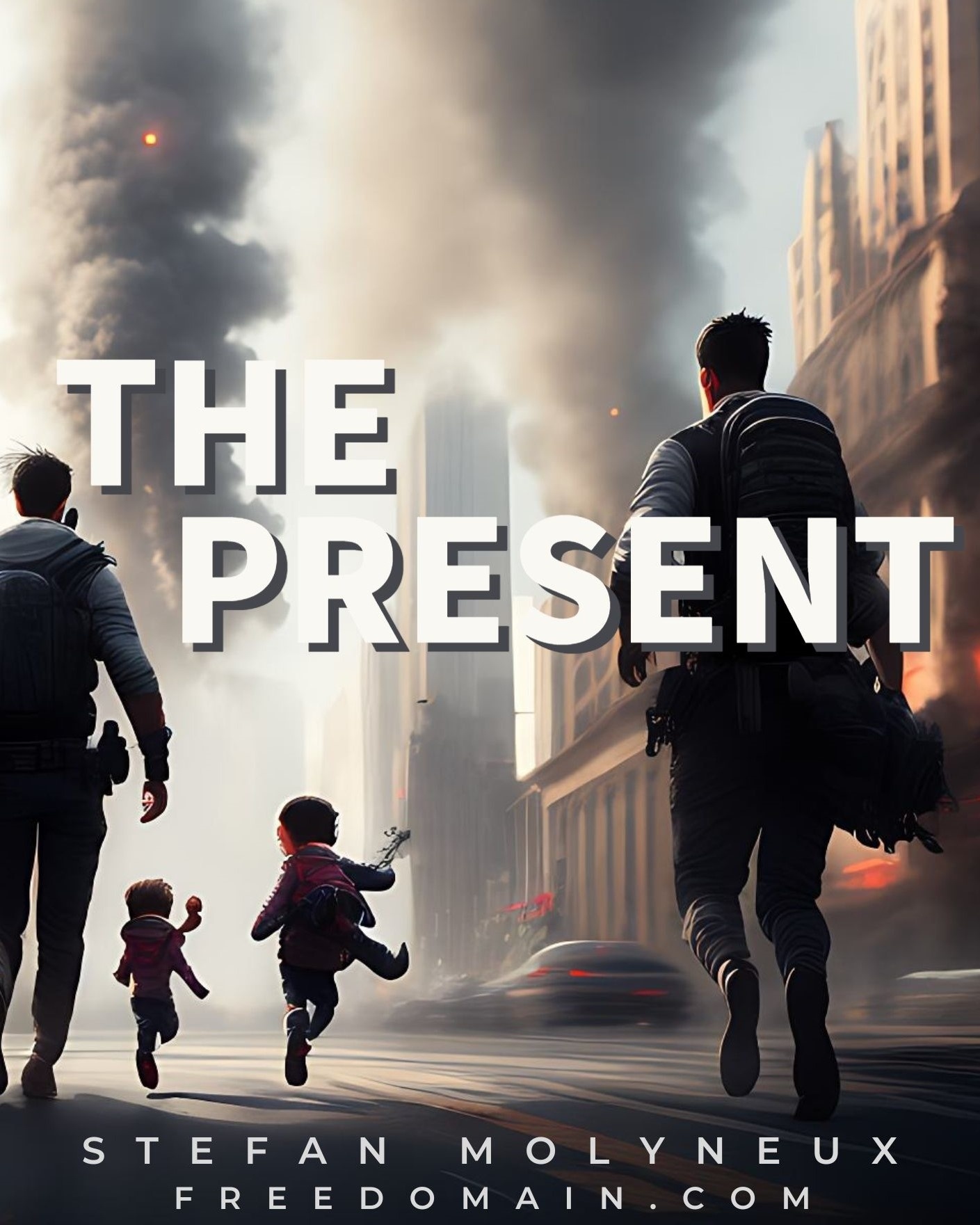
Chapter 1 of "The Present" introduces us to Rachel, a 28-year-old journalist whose life is an emblematic dance between modern feminist ideals and the temptations of traditional femininity. As she navigates her world—both public and personal—she is constantly caught in a tug-of-war between her ideological commitments and her deep-seated desires for acceptance and allure.
Rachel embodies the struggle of the modern woman trying to carve a path of significance in a slippery field, using her platform not necessarily for truth, but as a "change agent," a term she holds dear yet undefined. Her journalistic endeavors take her to picturesque but ultimately transient communities that disintegrate once her back is turned, highlighting her superficial engagement with real issues.
The complexity of Rachel's character is mirrored in her relationships. At home, Rachel is contrasted with her sister Cassie, who represents a more traditional path—married young, deeply rooted, and more focused on family than career. This dichotomy fuels Rachel's internal conflict as she grapples with the fear of mediocrity and the allure of potential greatness, which she believes is thwarted by settling or compromising.
Rachel’s journey through a restaurant scene, where she relishes the power of her minimalistic beauty and the command it gives her over her environment, sets the stage for a deeper exploration of her conflicts. She meets Cassie, whose life choices provoke in Rachel a mix of envy, disdain, and introspection. The narrative scrutinizes Rachel's feminist ideals, juxtaposing them against the realities she observes but does not fully engage with, such as Cassie's unexpected dive into discussions of men's rights—a topic that Rachel finds both alien and threatening.
The chapter closes on a note of unresolved tension between the ideals Rachel upholds and the real-world complexities she faces, embodying the modern existential crisis of balancing identity, ambition, and the human desire for connection and acceptance. Rachel's story is a vivid tableau of the challenges posed by the pursuit of an authentic self in a world that constantly questions the validity of traditional roles and the new paths forged by modern ideologies.
Chapter 2
In Chapter 2, Rachel encounters her brother-in-law Ian and her nephew Ben in a moment that perfectly encapsulates the tensions between modern lifestyles and traditional values. Ian, who has dropped out of a traditional educational path to join a cryptocurrency start-up, represents a blend of contemporary entrepreneurial spirit and a nostalgia for more grounded, traditional masculinity. He is described as a solid, somewhat skeptical man who enjoys simple pleasures and has a nuanced, if cautious, distance from mainstream political narratives.
The chapter delves deep into the dynamics of family life and the implicit challenges that come with it. Ian's approach to parenting, particularly his attempts to moderate his son's sugar intake, starkly contrasts with Rachel's more relaxed, modern attitudes. This scene at the restaurant serves as a battleground for these differing philosophies, where the tension between Ian's strict parenting style and the more indulgent tendencies of his wife Cassie plays out, culminating in a public display of family discord.
As Ian struggles with his son's behavior in the restaurant, the narrative explores themes of responsibility, the impact of dietary choices on children's behavior, and the broader implications of these choices on family dynamics. Ian's insistence on discipline and boundaries for Ben reflects a commitment to traditional values that Rachel finds both alien and, in some ways, admirable.
The chapter also exposes the underlying fractures in Rachel's perception of her own life choices, particularly through her interactions with Ian and Cassie. Her ambivalence towards Ian's blend of modern and traditional roles—his involvement in crypto and his physical transformation—highlights her own uncertainties about the balance between career ambitions and personal life.
As the scene unfolds, Rachel is forced to confront her own prejudices and the realities of her lifestyle choices. The chapter ends with Rachel and Cassie reflecting on the complexities of navigating modern life, the pressures of conforming to societal expectations, and the personal sacrifices that come with balancing career and family life.
Overall, Chapter 2 serves as a microcosm of the broader societal debate between progress and tradition, exploring how these tensions manifest in personal relationships and family life, and questioning the sustainability of modern lifestyles against the backdrop of traditional values.
Chapter 3
Chapter 3 of the story provides a deep insight into the complex dynamics between Rachel and Arlo, touching on themes of beauty, perception, and the impact of physical appearance on personal and interpersonal interactions. Arlo, having been born with exceptional physical attractiveness, experiences life differently from others. His attractiveness acts almost as a preemptive force, smoothing his path and shaping his interactions in ways that are both beneficial and isolating.
Arlo's father, aware of the pitfalls of such a life, instills in him the importance of developing intellect and character, knowing that physical beauty, especially for men, comes with its own set of challenges and misconceptions. Despite these efforts, Arlo grows up with an ease and charm that seem to shield him from deeper conflicts or the typical struggles faced by others, which ironically makes him a subject of envy and fascination.
The narrative also explores Rachel's fixation on beauty, shaped by societal standards and her mother’s influence, highlighting how deeply ingrained these perceptions are and how they dictate the choices and judgments she makes about herself and others.
The interaction between Rachel and Arlo during the climbing scene further reveals the cracks in their relationship. Arlo's seemingly nonchalant reaction to Rachel's fall exposes a disconnect in their expectations from each other and how they perceive risk, care, and emotional support. This incident metaphorically illustrates their ongoing struggle with communication and emotional connection, exacerbated by their differing views on life's challenges and risks.
Overall, this chapter delves into the psychological and social implications of beauty and the complexities it introduces into personal relationships and self-perception, set against the backdrop of a modern couple navigating their way through these intertwined challenges.
Chapter 4
Chapter 4 of "The Present" delves into the life of Cassie, contrasting her existence with that of her sister Rachel, and exploring the consequences of modern ideological pressures on traditional family life. Cassie, who leads a life marked by moderate aspirations and a desire for a harmonious family life, finds herself increasingly conflicted as societal expectations and reality diverge.
The narrative portrays Cassie as someone whose life could have been content and fulfilled, anchored by her role as a mother and her participation in the local community. However, the infiltration of progressive ideologies into her personal domain—specifically the decision to place her son Ben in daycare—begins to erode her peace. This chapter critically examines the impact of societal changes on individual lives, suggesting that the push towards modern norms and away from traditional family roles leads to dissatisfaction and internal conflict.
Cassie's husband, Ian, is depicted as a man who, lacking a strong paternal role model, adopts a modern, supportive role that inadvertently contributes to the family's dysfunction. His flexibility and passivity in the face of Cassie's decisions are presented not as virtues but as a failure to assert a traditional masculine role that could have steered the family clear of ideological pressures.
The chapter also addresses the tensions arising from differing parental approaches, where Ian's more playful and less disciplined interaction with Ben contrasts sharply with Cassie's growing frustration and reliance on structure. This culminates in a crisis moment where the lack of clear parental boundaries and authority leads to chaos and injury, illustrating the novel's critique of abandoning traditional discipline and structure in favor of a more permissive, modern approach.
Overall, Chapter 4 serves as a commentary on the dangers of deviating from time-tested methods of parenting and living, suggesting that modern ideologies often clash with the instincts and needs that lead to a stable and fulfilling life. The narrative warns against the allure of new societal norms that contradict the natural order of family and community, advocating for a return to principles that have historically anchored human societies.
Chapter 5
Chapter 5 of "The Present" opens with a dramatic and introspective moment for Cassie and Ian, as they sit in their car outside their home, grappling with the fallout from a distressing incident involving their son Ben. This chapter delves deep into the heart of modern familial and societal dynamics, questioning the sustainability and morality of contemporary parenting choices influenced by progressive ideologies.
As they await Ben's peaceful awakening, Ian initiates a profound discussion about their life's path, likening it to rigid train tracks laid down by societal expectations rather than personal convictions. This metaphor underscores a central theme of the narrative: the loss of individual agency in the face of societal pressures. Ian's reflection prompts a candid introspection about the couple's adherence to external advice over their own instincts, suggesting a fundamental disconnection from traditional values that champion family and personal responsibility over professional achievements.
The economic irrationality of their current lifestyle is laid bare as Ian calculates the financial and emotional cost of outsourcing childcare. This economic analysis is juxtaposed with the emotional turmoil experienced by their son, portraying a vivid picture of the unintended consequences of modern economic behaviors on family life. Ian's argument that much of Cassie’s paycheck is consumed by daycare and associated costs challenges the practicality of both parents working outside the home, highlighting the diminished returns on their investment in their careers at the expense of family cohesion and stability.
Furthermore, Ian challenges Cassie's prioritization of her career over her family, questioning whether the societal valorization of professional over familial roles might be misguided or even harmful. This confrontation is emblematic of a broader critique of modern feminist paradigms that, according to the narrative, undervalue motherhood and traditional family structures.
The tension between the couple escalates as they discuss potential changes, including moving to the country to escape the unsustainable lifestyle they lead. This solution is proposed as a return to simplicity and a reclamation of autonomy in crafting their family life, away from the overbearing noise of urban existence and societal judgments.
The chapter also subtly introduces the theme of men’s rights, linking it to broader societal issues such as the economic impact of dual-income households on wages and the cultural devaluation of paternal roles. This is intertwined with the personal narrative, making Ian's interest in men’s rights a significant element of his character development and ideological stance.
Chapter 5 of "The Present" thus serves as a critical reflection on the modern dilemma of balancing work and family life, questioning the sustainability of current societal norms and advocating for a reconsideration of traditional values as a foundation for personal and familial fulfillment.
Chapter 6
Chapter 6 of "The Present" vividly portrays the character of Oliver as he navigates the complexities of his professional and personal life amidst societal decay and family bonds. The narrative delves deep into themes of societal collapse, personal responsibility, and the importance of family and faith in facing modern challenges.
Oliver's day is characterized by the frustrations of a slowing economy and a malfunctioning supply chain, reminiscent of his childhood struggles with a dysfunctional bicycle. This metaphor subtly underscores a broader societal decline from a past of perceived efficiency and promise to a present fraught with inefficiencies and unfulfilled expectations. Oliver's reflection on the empty highways, once bustling with commerce, serves as a stark symbol of economic stagnation and the diminishing vitality of urban centers, which he views as black holes consuming resources without awareness or appreciation.
The chapter shifts from the macro troubles of the world to the microcosm of Oliver's family life, illustrating a stark contrast between the failing societal structures and the robustness of familial and community bonds. The family gathering is depicted as a sanctuary, a vibrant tableau of generational continuity and moral fortitude against the backdrop of societal breakdown. Here, traditional values are celebrated, and the importance of family support, faith, and collective resilience is emphasized.
The interactions at the family barbecue are rich with discussions about the changing world, echoing themes of preparation and survival in an uncertain future. The family’s dialogue reflects a conscious rejection of modernity's failings and a return to foundational principles of self-sufficiency, community support, and spiritual faith. The narrative critiques contemporary dependency on unstable systems and advocates for a proactive, preparedness-oriented approach to life’s challenges.
Oliver’s reflections and interactions highlight a yearning for simpler times and a critique of modern complexities that disconnect individuals from their community and spiritual roots. His mother's anecdotes and the family’s collective reminiscing serve as a powerful affirmation of their values and the strength derived from their close-knit relationships.
This chapter, therefore, juxtaposes the decay of external societal structures with the vitality of traditional, family-oriented living, suggesting that the latter holds the key to navigating the challenges of modern life. Through Oliver's story, the narrative advocates for a reevaluation of priorities, suggesting that true fulfillment and security are found not in the pursuit of material success but in the richness of faith and family.
Chapter 7
Chapter 7 of "The Present" delves into the intense and emotionally charged family dynamics following Jayda's outburst and departure. The chapter explores themes of sin, responsibility, redemption, and the profound challenges of engaging with someone deeply entrenched in ideologies that clash with the family's values.
The family, deeply rooted in Christian faith, gathers to discuss Jayda's confrontational stance and her apparent rejection of their values. The narrative portrays their struggle to reconcile their desire to help Jayda with the harsh reality of her opposition. They reflect on their previous attempts to reach out to her, which were met with resistance and dismissal, highlighting a generational and ideological rift that seems insurmountable.
The discussion becomes a broader reflection on the societal shifts they perceive as hostile to their way of life, emphasizing a sense of cultural and moral crisis. They lament the loss of community, the erosion of shared values, and the rise of a culture that, in their view, prioritizes individualism and rebellion against traditional structures. This is juxtaposed with their firm belief in the transformative power of repentance and forgiveness, though they grapple with the painful recognition that not everyone is receptive.
Oliver, a central figure in the discussion, articulates a grim outlook on the possibility of reconciling with Jayda, suggesting that her path may be too far gone to return from. He equates her behavior to broader societal decay, driven by a rejection of divine guidance and an embrace of secular, state-supported existence that negates personal accountability and spiritual growth.
The family contemplates the tough choices ahead—whether to continue trying to save Jayda from her self-destructive trajectory or to protect their own spiritual and moral integrity by distancing themselves. This dilemma underscores the painful realization that while they are committed to practicing Christian forgiveness and intervention, there might come a time when letting go is necessary to preserve their own faith and well-being.
In this chapter, "The Present" confronts the harsh realities of familial and societal discord, the limits of intervention, and the deep-seated challenges of witnessing loved ones turn away from cherished beliefs. It captures the profound sadness of potential loss, not just of Jayda but of the societal cohesion they once knew, marking a pivotal moment of reflection and decision for the family.
Chapter 8
Chapter 8 of "The Present" portrays the character Rachel as she grapples with the complex and controversial topic of men's rights, a project that leads her into a crisis of professional identity and personal ethics. Facing relentless rejection from publishers who disapprove of her approach to the subject, Rachel reflects the frustration of trying to bridge understanding in a polarized society. Her query letters, filled with attempts to present a balanced view on men's rights, are met with criticism and outright dismissal, isolating her within her professional community.
The chapter delves deep into the ideological warfare surrounding men's rights, highlighting the vitriolic backlash against men who feel marginalized and the societal insistence on viewing such sentiments as misogynistic or regressive. It shows Rachel navigating the treacherous waters of modern journalism, where the middle ground is often the most contentious and lonely place to stand.
Her personal life also mirrors this conflict, with her partner Arlo providing a sounding board for her frustrations and fears. Arlo, who prefers a life devoid of confrontation, contrasts sharply with Rachel's driven, confrontational nature. Their dialogue exposes the emotional toll of Rachel’s professional struggles, as she seeks to make a meaningful impact through her work, only to find herself thwarted by societal and editorial gatekeeping.
This chapter effectively sets up the philosophical and practical dilemmas facing individuals who dare to explore unpopular or misunderstood topics. It questions the possibility of true neutrality in journalism and whether societal change can be fostered without personal sacrifice or backlash. As Rachel's story unfolds, it becomes a reflection on the power dynamics and cultural shifts that challenge traditional narratives and complicate the pursuit of truth in a divided world.
Chapter 9
Chapter 9 of "The Present" dramatically unfolds with Rachel visiting her once formidable aunt, Crystal, who has notably diminished in health and spirit. As Rachel enters the opulent yet solemn building where Crystal resides, the stark contrast between the external grandeur and her aunt's frail condition sets a poignant tone for the chapter.
The narrative reveals Crystal as a once-vibrant and globally recognized journalist, whose career has been tarnished not by a lack of talent, but by a confluence of ill health and the changing tides of media and public perception. Her ambitious and fearless nature, which had previously propelled her into dangerous and groundbreaking journalistic endeavors, now seems to be a shadow of its former self, leaving her isolated and struggling.
As Rachel interacts with her aunt, the chapter delves into themes of legacy, the relentless passage of time, and the brutal realities of aging and illness. Crystal's living space, cluttered with remnants of her storied past, mirrors her current state of confusion and disarray. The dialogue between Rachel and Crystal is charged with desperation and nostalgia, highlighting a profound familial bond and the inherent tensions within.
The crux of the chapter lies in Crystal's plea for help to complete her autobiography—a project that she views as her final chance to reclaim some control over her narrative and secure her legacy. This request places Rachel in a precarious position, caught between her professional challenges and personal loyalties.
Overall, Chapter 9 is a reflection on the price of living a life tethered to the pursuit of truth and the inevitable decline that confronts even the most spirited individuals. It poses significant questions about the value of legacy, the fairness of societal judgment, and the complexities of family dynamics in the face of adversity.
Chapter 10
In Chapter 10 of "The Present," Rachel awakens from a troubling dream that prompts her to reflect on the complex moral landscape of the modern world. The chapter vividly captures the chaos unfolding in her urban neighborhood, serving as a metaphor for broader societal decay and the erosion of community standards.
Rachel's day begins with observing a flash mob looting a local electronics store, an event that exacerbates her feelings of disconnection and safety from her high-rise apartment, juxtaposing her physical detachment from the street-level turmoil. This detachment is not only physical but also emotional, as she views the chaotic scenes below with a cinematic detachment, reflecting a broader societal disengagement from personal responsibility and civic duty.
Her interaction with Arlo, her partner, underscores personal tensions and the everyday banalities of their relationship, contrasting sharply with the external social upheaval. The intrusion of the chaotic external world into their domestic life through the noise from the street emphasizes the inescapability of societal issues.
The chapter also delves into Rachel's professional challenges. Her attempts to communicate with Oliver, an influential figure within the men's rights movement, illustrate her struggles against the barriers erected by mistrust and past betrayals within activist communities. Her frustration with not being able to secure a source for her article highlights the challenges journalists face in accessing closed or wary communities.
As Rachel navigates her personal and professional dilemmas, she reflects on the nature of media and reporting, questioning the ethics and motivations behind journalistic pursuits in a world where sensationalism often trumps depth and factual reporting. The chapter closes with Rachel making a resolve to confront Oliver at a business conference, indicating her desperation to reclaim some control over her narrative and her career.
Overall, Chapter 10 of "The Present" is a deep exploration of personal isolation amidst social chaos, the complexities of journalistic integrity, and the personal determination to overcome professional obstacles. It paints a picture of a protagonist at a crossroads, caught between personal ambition and the moral quandaries posed by her societal role.
Chapter 11
Chapter 11 of "The Present" vividly captures the complexities of personal integrity and societal expectations through the interactions between Rachel and Oliver at a business conference. Rachel, under the guise of 'Rochelle', is portrayed as someone who meticulously crafts her appearance and behavior to influence and engage with the high-profile attendees, despite an underlying conflict with her own values. Her initial approach, focused on external validation and superficial interactions, is contrasted starkly with Oliver's demeanor, which is calm, introspective, and seemingly indifferent to societal gamesmanship.
Oliver's character serves as a philosophical foil to Rachel, emphasizing authenticity and critical thinking over social manipulation and surface-level engagements. As they converse, Oliver challenges the prevailing social norms and Rachel's adherence to them, suggesting that societal structures often incentivize superficiality and self-interest at the expense of genuine human connection and moral integrity.
Their dialogue explores themes of survivalism, the perceived roles of men and women in society, and the consequences of societal expectations on personal behavior. Oliver's views on the redistribution of resources and societal appreciation—or lack thereof—of different genders’ contributions provoke a deep introspection in Rachel. He posits that the societal structures ostensibly designed to protect and empower often end up perpetuating cycles of dependency and ingratitude, which are detrimental to both individual fulfillment and societal progress.
This chapter uses the setting of the business conference not just as a backdrop but as a microcosm of the larger world where power dynamics, gender roles, and economic interactions play out. Rachel’s journey through this chapter reflects a growing awareness and discomfort with her own complicity in these systems, prompted by Oliver's unorthodox perspectives that challenge her to reassess her values and the societal "truths" she has accepted. Oliver's parting advice to Rachel to seek deeper truths and spiritual grounding underscores a central theme of the narrative: the quest for authenticity and ethical grounding in a world that often values appearance over substance.
Chapter 12
In Chapter 12 of "The Present," the narrative unfolds in a tense, introspective setting that sharply reflects the brewing undercurrents of societal collapse as perceived by the protagonist, Oliver. The chapter begins with a seemingly mundane yet emotionally charged deer hunting expedition, revealing much about the characters' worldviews and personal concerns.
Oliver, along with his brother David, brother-in-law William, and young Ian, are stationed in a deer blind. As the men wait and watch, their conversation veers into deep and dark territories, intertwining personal anxieties with broader societal issues. Oliver articulates a vivid, almost dystopian vision of global and domestic instability, drawing connections between personal hardship, economic disruptions, and a loss of social coherence. He speaks of the fragility of supply chains and the consequences of governmental overreach and inefficiency, highlighting his frustrations with the current state of affairs.
The conversation also touches on more personal issues, such as family dynamics and the upcoming challenges of fatherhood under uncertain circumstances. Oliver's view of the world is stark and often bleak, focusing on the need for self-reliance and preparation for imminent societal breakdown. He criticizes the superficiality and dependency fostered by modern systems, urging a return to more foundational, survival-oriented skills and mindsets.
The chapter culminates in an intense hunting scene where the reality of life and death, and the visceral nature of survival, are brought to the forefront. This experience serves as a metaphor for the larger themes Oliver discusses: the need to confront harsh realities, make difficult decisions, and perhaps most importantly, prepare for a future that promises to be radically different from the present.
Overall, Chapter 12 serves as a poignant reflection on the anxieties of contemporary life, questioning the sustainability of current societal trajectories and highlighting the importance of resilience and foresight in the face of potential collapse.